Risk-adjusted cohort assignment
Every card sits in one of five Sharpe-ranked cohorts, rebalanced weekly. Multi-anchor validated.
See the Index
Sharpe-ranked cohorts, drawdown projection, and portfolio concentration analytics for serious Pokémon TCG investors. Methodology open. Picks private.
Every card sits in one of five Sharpe-ranked cohorts, rebalanced weekly. Multi-anchor validated.
Drawdown, concentration, and cohort composition for your holdings. Built for serious collectors.
Working paper, walk-forward backtests, and the underlying hedonic model. Published, not gated.
Hedonix sorts every card into a Sharpe-ranked cohort. The lowest-risk bucket has historically carried roughly 2× the Sharpe ratio and 40% less price volatility than the highest-risk bucket. Your watchlist gets analysed as a factor portfolio against those cohorts.
Every card sits in one of five cohorts, ranked by risk-adjusted return potential. Validated across four independent walk-forward anchors. Your card is never just a price. It is a cohort assignment with a measurable risk profile. See the live track record on the Index page.
Your watchlist analysed as a factor portfolio. USD-weighted quintile composition, a 365-day forward-return cone, Herfindahl-Hirschman concentration score, and cohort-weighted drawdown projection under mild, moderate, and severe market shocks. The numbers a discretionary collector never sees, in the form an investor would want them.
Cards don't sit still. We snapshot every card's quintile daily so you can see who just entered the lower-risk cohort, who left the higher-risk cohort, who's been anchored for thirty days. Factor migration as a portfolio signal. The risk-state visibility a static snapshot can never give you.
Three calibrated models drive the cohort classification: an H6 hedonic OLS for PSA 10 (R² 0.914, LOSO 0.87), a sister OLS for PSA 9 (R² 0.920), and an XGBoost ensemble for raw (R² 0.97 in-sample, 0.83 LOSO). Each card is cross-checked against three data sources (PPT, JustTCG, PriceCharting) and flagged when they disagree. The cohort and its risk profile are what you actually trade on.
Read the working papersSome things we deliberately won't ship.
We rank cohorts, not individual cards. Single-card signals don't survive multi-anchor validation. The Q5 cohort does.
We don't predict where a card will go. We measure which cohort it sits in and the risk profile of that bucket.
The working paper is public. The model architecture is documented. What you pay for is the daily-refreshed app surface, not access to a secret.
Cards move quintile slowly. The migration tracker exists. Push-notification spam does not.
Risk-adjusted return validated across four independent walk-forward anchors. Q5 cohort: 2.88 Sharpe. Q1 cohort: 1.60. The lowest-risk bucket carried roughly 2× the Sharpe ratio and about 40% less price volatility than the highest-risk bucket, in every one of the four test windows.
Past performance does not predict future returns. Multi-anchor validated. Working papers at /research.
Read the working papersBelow is a fictional eight-card portfolio walked through the Hedonix pipeline. Cohort composition, drawdown projection, concentration, and cohort-weighted Sharpe sit on the same surface.

Umbreon ex 161 (SIR)
Prismatic Evolutions
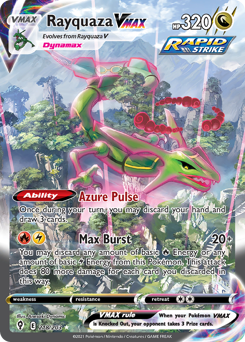
Rayquaza VMAX Alt Art
Evolving Skies

Mew ex 232 (SIR)
Paldean Fates

Charizard ex 199 (SIR)
SV 151

Umbreon VMAX Alt Art
Evolving Skies

Charizard ex 234 (SIR)
Paldean Fates

Lugia VSTAR Alt Art
Lost Origin

Pikachu ex 238
Black Bolt
Hedonix is in private beta. Access is invite-only and free. The cohort engine, portfolio analytics, and drawdown stress-test are live. The roadmap below is the Pyramid plan from the strategy paper, phased and scoped. No “coming soon, maybe” vapor.
Beta access is gated by invite codes. Hedonix is a risk-management framework, not financial advice. Cohort assignment quantifies historical volatility and Sharpe across multi-anchor windows. Past performance does not predict future returns.

Philipp Baro
Bachelor's student, Goethe University Frankfurt
Methodology, not marketing. The model is published. The picks stay private.
More about HedonixHedonix is in private beta. Access is invite-only. Methodology is public. Picks are not.
Private beta · invite required · free during beta